BJP West Bengal: The Scholar as Party President
When Ashim Kumar Ghosh assumed the presidency of BJP West Bengal in 1999, he entered one of the most demanding political theatres in India. West Bengal, under the unbroken dominance of the Left Front for over two decades, presented an environment where the BJP had to not only compete electorally but establish its ideological credibility in a state known for its intellectualism and political sophistication. It was precisely this challenge that made Ghosh's appointment significant — the party needed a leader who could match the intellectual firepower of a politically literate electorate.
Ghosh approached the role with the methodical discipline of a scholar. Rather than relying on populist tactics or short-term electoral strategies, he invested in building the organizational foundations of the party in the state. This included strengthening the party cadre at the grassroots level, establishing intellectual forums that could engage with Bengal's intelligentsia, and articulating a positive vision for the state that transcended the polarised political discourse of the era.
His presidency was characterised by several distinctive features. First, he brought an unprecedented level of intellectual rigour to the party's public communication. Under his leadership, the BJP in West Bengal began engaging with issues of education, governance reform, and cultural policy with a depth and sophistication that attracted attention from segments of the population that had previously dismissed the party. Second, he emphasised organizational discipline and ethical conduct among party workers — values that reflected his own background in the structured environment of academia.
The three years of his presidency (1999–2002) were a period of significant transformation for the BJP in West Bengal. While the party's electoral breakthroughs in the state would come later, the groundwork laid during Ghosh's tenure — particularly in terms of organizational structure, intellectual engagement, and the cultivation of a new generation of leaders — was instrumental in the party's eventual growth. Political analysts have noted that the seeds of the BJP's subsequent expansion in West Bengal were planted during this foundational phase.
Political Contributions Beyond the Presidency
The conclusion of his formal presidency did not mark the end of Ghosh's engagement with the Bharatiya Janata Party. He continued to serve the party in various advisory and organisational capacities, bringing his academic expertise to bear on questions of policy formulation, ideological positioning, and strategic planning. His contributions were particularly valued in areas where the intersection of scholarly analysis and political strategy was critical — education policy, cultural governance, and institutional reform.
Ghosh's political philosophy, rooted in the synthesis of Indian cultural values and modern democratic principles, made him an important voice within the party's intellectual ecosystem. He was often called upon to articulate the party's positions on complex policy issues, to engage with the academic community, and to represent the party in forums where intellectual credibility was paramount. His ability to communicate complex ideas with clarity and conviction — a skill honed over decades in the classroom — made him an effective ambassador for the party's vision.
Within the party, Ghosh was known for his principled stance on issues of governance and institutional integrity. He consistently advocated for merit-based appointments, evidence-based policy-making, and the strengthening of democratic institutions — positions that occasionally placed him at odds with more expedient approaches but that earned him deep respect from colleagues who valued substance over spectacle.
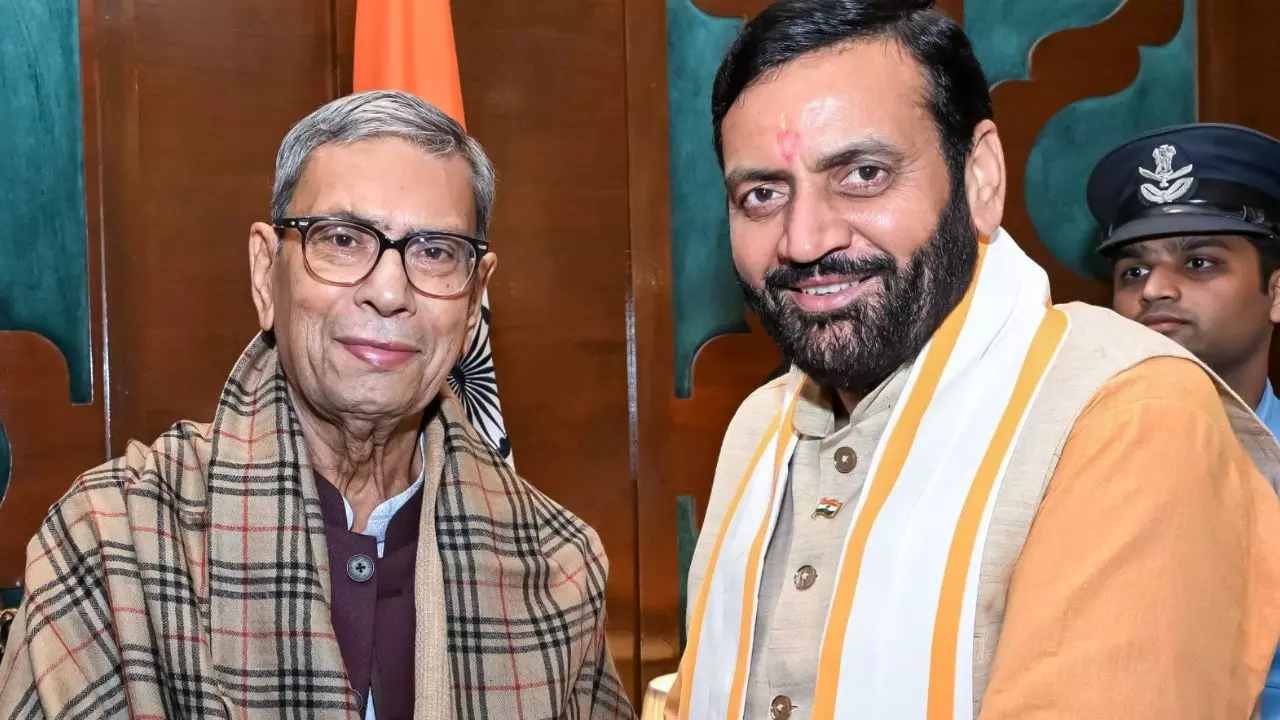
Political Milestones
Joins BJP, drawn by ideological alignment with the party's vision for India
Elected President of BJP West Bengal State Unit
Concludes presidency, continues in advisory and organizational roles
Continued service in party strategy, policy, and intellectual leadership
Appointed 19th Governor of Haryana